
Transit EV Charging Solutions
Keep fleets on schedule, meet federal and state zero-emission mandates, and deliver reliable service to your riders without compromising the depot operations that power your network. Our transit charging solutions are purpose-built for the high-utilization, mission-critical demands of bus rapid transit, fixed-route bus, and paratransit fleets.
Seamless
Reliable
EV Charging
Turnkey EV Charging Infrastructure for Public Transit Fleets
Camber Charging delivers depot charging solutions for some of the most demanding transit environments in North America—from urban bus rapid transit corridors to rural fixed-route networks and paratransit operations serving riders who depend on every trip. Public transit electrification is more than an equipment purchase. It requires right-sizing electrical capacity, coordinating with utilities on peak demand management, navigating federal grant programs, and ensuring infrastructure can scale with your fleet. Our clients choose Camber because we reduce project risk, accelerate timelines, and deliver infrastructure that performs reliably when your riders are counting on it.
Electrification Pressure Is Moving Faster Than Infrastructure.

Your Pressure:
Your Reality:
Built for Transit Agency Operations

Fixed-Route Bus
Bus Rapid Transit (BRT)

Paratransit & Demand Response

Commuter & Regional Bus
Why Camber for Transit Fleet Electrification?
98% Uptime Guarantee
When your buses need to pull out at 4:30am, your charging infrastructure can’t be down. We guarantee 98% uptime with redundant systems, 24/7 monitoring, and rapid response protocols engineered for the demands of transit depot operations.

Transit Operations Expertise
We understand duty cycles, block scheduling, and the economics of transit agencies operating under FTA and state oversight. Our team has delivered charging infrastructure for urban bus depots and regional transit centers where complexity is the norm and service continuity is non-negotiable.
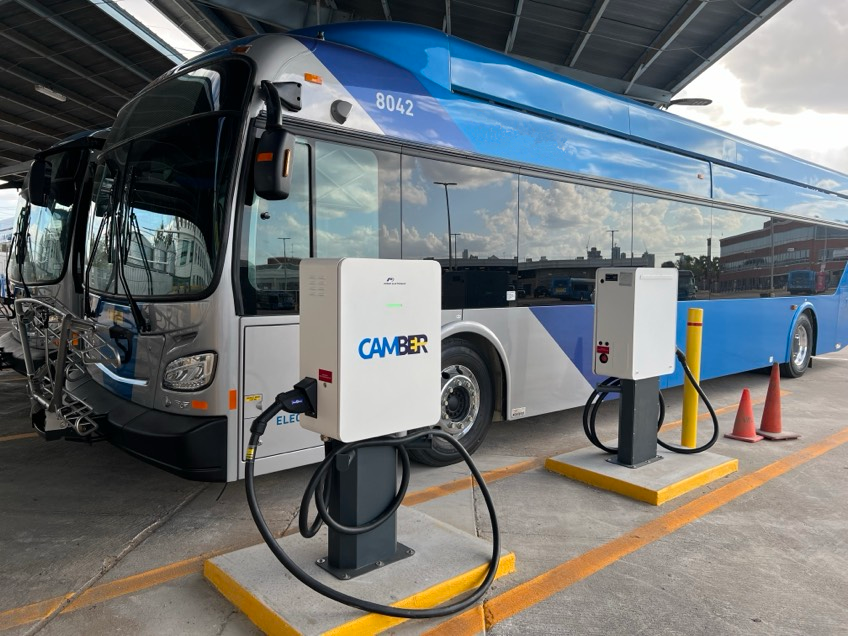
Turnkey Project Management
From site assessment through energization, we manage utility coordination, permitting, construction, and commissioning. Proactive load and demand charge management keeps systems performing at peak as your fleet scales vehicle class by vehicle class.

Grant & Funding Support
FTA Low-No Program, EPA Clean Bus grants, HVIP, CARB incentives, utility rebates, and state clean transit funds can collectively cover 40–80% of infrastructure and vehicle costs—but only if you know where to look. We identify applicable programs, manage Buy America compliance, and maximize your funding stack before deadlines close.

How We Build Your Charging Infrastructure
Transit Fleet Electrification Resources
Featured Case Study:
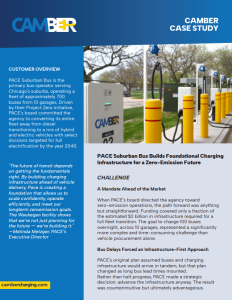
PACE Suburban Bus Builds Foundational Charging
Infrastructure for a Zero-Emission Future
When PACE’s board directed the agency toward
zero-emission operations, the path forward was anything
but straightforward. Funding covered only a fraction of
the estimated $2 billion in infrastructure required for a
full fleet transition. The goal to charge 100 buses
overnight, across 10 garages, represented a significantly
more complex and time-consuming challenge than
vehicle procurement alone.
Experience That Delivers
1500
DC Fast Charger
Ports Deployed
36
States and
Provinces
50
GWh of EV
Batteries Charged
60
Million Miles Heavy Duty EVs Travelled
2
Million Hours of Charging Sessions
News You Can Use
-
Why Top Transit Agencies Choose Camber
Zero-emission mandates are moving faster than most transit agencies can build the … Read more
-
LA Metro Taps Camber Charging to Electrify Bus Network in Time for 2028 Olympics
$58M Contract included up to 73 Chargers at 20+ Locations as Los … Read more
Maximize Available Funding for Your Transit Fleet
Federal and state programs have committed billions to transit electrification, with programs specifically targeting public bus fleets, depot infrastructure, and zero-emission vehicle procurement. Typically, rebates can collectively cover 40–80% of infrastructure and vehicle costs, but application windows are narrow and funding is first-come, first-served. We help transit agencies identify applicable programs, structure applications to meet FTA and Buy America requirements, ensure compliance throughout the grant period, and close the funding gap before deadlines pass.
FAQ?
Most transit depot charging projects take 6 to 18 months from contract to energization, depending on the size of the installation and utility upgrade requirements. The longest lead time is typically utility coordination and interconnection approval, which can take 12 to 36 months in some markets. Camber begins utility coordination early in the project lifecycle to compress timelines and keep your fleet electrification schedule on track.
Most transit depots were designed for diesel operations and require electrical upgrades to support DC fast charging at scale. Camber conducts a site assessment and load analysis early in the engagement to identify capacity gaps, model upgrade costs, and right-size the infrastructure for your current fleet and future growth — before any equipment is purchased.
Yes. Camber designs and manages charging infrastructure across multiple depot locations under a single engagement, with centralized monitoring and reporting through Camber Core. Multi-agency shared infrastructure planning is also something we support for regional transit authorities managing shared facilities or coordinated service networks.
Transit agencies have access to several funding sources including FTA Low or No Emission Vehicle Program (Low-No), CARB HVIP, Volkswagen Environmental Mitigation Trust funds, state ZEV incentive programs, and utility make-ready programs. Layering multiple programs can significantly offset infrastructure and vehicle costs. Camber helps agencies identify applicable programs, structure applications, and ensure ongoing compliance reporting.
CARB’s ICT rule requires California transit agencies to transition to a 100% zero-emission bus fleet by 2040, with phased procurement requirements starting now. Compliance requires both vehicle procurement and depot infrastructure readiness. Camber works with agencies to develop a phased infrastructure plan aligned to your ICT compliance schedule, fleet replacement timeline, and available funding windows.
Camber Core’s smart load management and block scheduling integration ensures chargers are prioritized around your pull-out windows and shift patterns. The system automatically manages energy distribution across your depot so every bus gets the charge it needs without overloading your electrical infrastructure or disrupting service schedules.
Camber’s 24/7 monitoring system detects faults in real time and triggers immediate response protocols. Our 98% uptime guarantee is backed by proactive maintenance, remote diagnostics, and rapid on-site response — minimizing the risk of a bus leaving the depot undercharged due to equipment failure.
While upfront infrastructure investment is significant, transit agencies typically see meaningful reductions in fuel and maintenance costs over time. Electricity costs are generally lower and more predictable than diesel, and EVs have fewer moving parts reducing maintenance overhead. Camber’s pay-for-performance model through Camber Complete also shifts infrastructure risk away from the agency, converting capital expenditure into a predictable operational cost.
