
EV Fleet Dispensers & Automated Pantograph Charging
Camber offers both industrial and inverted pantograph dispensers for your fleet.
The Right Interface Between Your Charger and Your Fleet
A charging dispenser is the physical interface between your charging infrastructure and your vehicle. Camber supplies a full range of fleet dispenser configurations, from standard CCS1 plug-in units to Schunk automated pantograph systems for transit buses and heavy-duty vehicles that require hands-free, automated connection.

Schunk Pantograph Dispensers — Automated Charging for Transit and Heavy-Duty Fleets
For electric bus fleets, transit agencies, and port equipment operators, Schunk Smart Charging pantograph systems are the gold standard for automated depot charging. Schunk’s systems connect to the vehicle in seconds and support charging capacities up to 1 megawatt, depending on the power cabinet configuration.
Camber is a certified installer and service provider for Schunk pantograph systems, which are deployed across more than 180 projects in 25+ countries, including major transit agencies in North America.
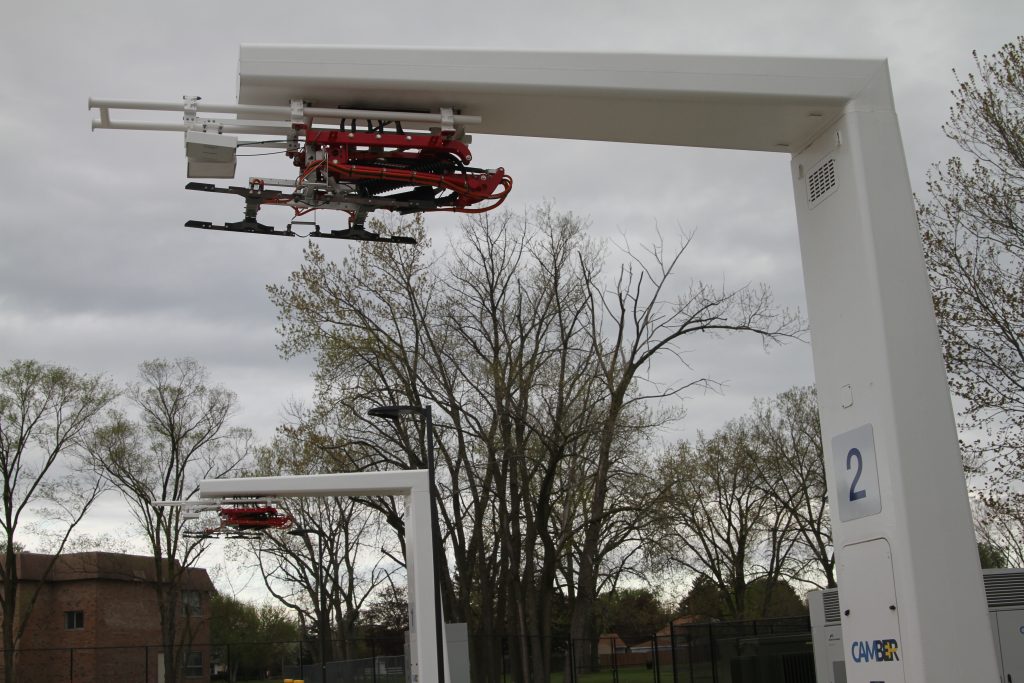
Inverted (Top-Down) Pantograph — Schunk SLS 201/301
The pantograph is mounted overhead on an infrastructure mast or depot structure; it lowers to make contact with a receiver on the vehicle’s roof. This approach is particularly suited to mixed-height bus fleets, where vehicles of different heights share the same charging bays. The Schunk SLS 201 holds UL/ETL certification and Buy America compliance, making it eligible for federally funded transit projects. The SLS 301 Depot Charger supports a lightweight design that allows tight depot parking with minimal hardware on the vehicle.
Who Uses Pantograph Dispensers?
Transit agencies operating electric bus fleets of any size
School districts transitioning to electric school buses under EPA Clean School Bus or state programs
Port and terminal operators with electric yard trucks, AGVs, or ground support equipment
Logistics hubs using electric heavy-duty tractors with pantograph receivers
Standard Plug-In Dispensers — Slim, Cooled, and Depot Configurations
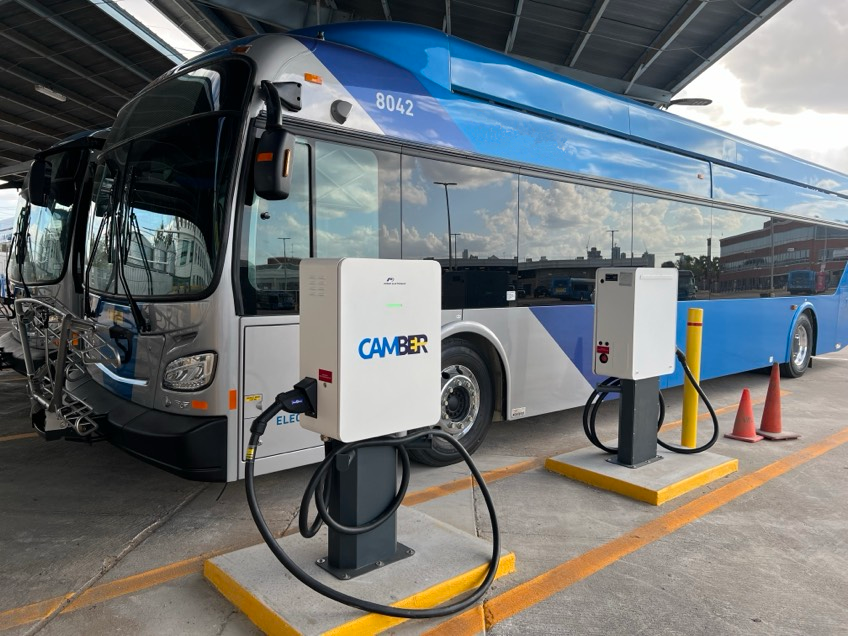
For fleets using CCS1 plug-in charging, Camber’s cabinet and station chargers are compatible with three Power Electronics dispenser families:
Slim Dispenser — compact footprint for dense parking configurations; CCS1 connector with 5-meter cable management
Cooled Dispenser — liquid-cooled for high-current sustained charging; ideal for vehicles with high onboard charging rates
Depot Dispenser — ruggedized for heavy-duty fleet environments; IK10 impact resistance, IP54 ingress protection
All dispensers support the OCPP protocol, integrate with Camber Core charge management software, and are configurable for RFID access control.
Key Specifications
| Spec | Value |
|---|---|
| Maximum Power Output | 30kW |
| DC Voltage Range | 150 – 750 VDC |
| Connector Types | CCS1, CHAdeMO |
| Display | 7-inch touchscreen |
| Protocol | OCPP 1.6J, 4G / Ethernet / cellular |
| Certifications | ETL Listed, ENERGY STAR Certified |
| Installation | Wall-mount or pedestal |
| Compliance | UL 2202, NEC 625 |
| Warranty | 3-year standard, extensions available |
Frequently Asked Questions
A pantograph charger is an automated charging system that makes electrical contact with a vehicle without any manual plug-in step. The pantograph mechanism — either mounted on the vehicle roof or on overhead depot infrastructure — extends or lowers to connect to a contact pad or rail on the vehicle or charging structure. Connection typically occurs in under 10 seconds and is triggered automatically when the vehicle parks in the designated charging position. This is particularly valuable for transit bus fleets where drivers need to depart quickly without stopping to connect a cable.
Yes. Camber’s Power Electronics NB Station and NBi 360 cabinet chargers are compatible with both standard CCS1 plug-in dispensers and Schunk pantograph systems, so a depot can run a mix of connection types on the same charging infrastructure. This is common in transit agencies that operate both new pantograph-equipped buses and older vehicles that still use CCS1 plug-in connections.
The Schunk SLS 201 inverted pantograph holds both UL/ETL certification and Buy America compliance, making it eligible for federal transit grant programs including FTA-funded projects. Camber’s team can help document compliance for your grant application.
